

Transportation & Fuel Sloshing
AXS applications for mobile fuel tanks where liquid movement and diesel foaming can affect stability, filling and operating behavior.
Fuel movement in a partially filled tank
When a tank is only partly filled, acceleration, braking and turning can create significant liquid movement. In mobile equipment, that sloshing can contribute to instability and difficult handling.
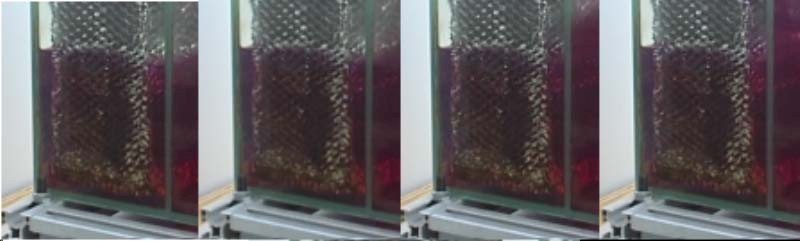
AXS response: internal slosh-control network
AXS Cylinders create an internal network through the liquid volume. AXS has used side-by-side test chambers to compare fluid movement with and without the material present.
Hazel Park, Michigan — 15 July 2009.
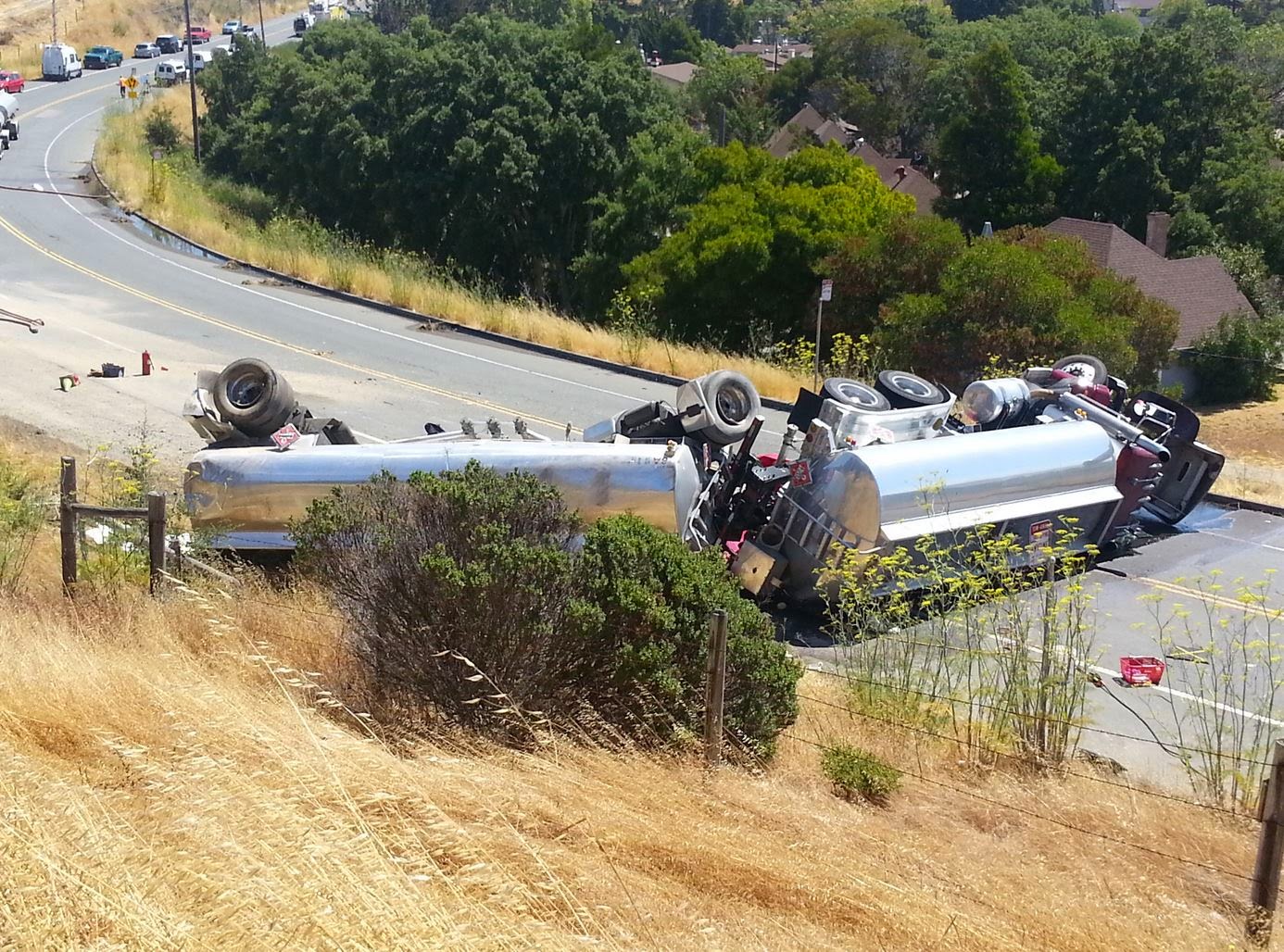
A fuel-tanker crash on I-75 at 9 Mile Road caused an explosion and extensive damage to the highway and bridge structure. Michigan’s official emergency record identifies the event as a fuel-tanker crash and explosion requiring emergency repair; the state’s hazard record reports approximately 13,000 gallons of fuel, injuries to the three drivers involved, flames rising roughly 150–200 feet, and collapse of the Nine Mile Road overpass.
This incident is presented as the real-world hazard context for gasoline transportation. It is not presented as an AXS test and the public record does not establish the ignition source.
Open the Michigan emergency record →A fuel-tank protection application with a government record.
The AXS material has been examined in U.S. government and military programs concerned with fuel-tank protection against attack as well as accident. The supporting record includes the U.S. Department of Homeland Security, the U.S. Air Force, the U.S. Army TARDEC program and United States Senate correspondence.
AXS discusses this application with government, security and insurance departments under confidentiality. No threat scenario or operational detail is published here.
See the supporting record →Diesel foaming steals tank capacity, driver time and fleet productivity.
A diesel tank can appear full before it actually is. During refueling, a thick foam head can rise to the filler neck and trip the nozzle while usable tank volume remains below it. The driver then has two choices: wait for the foam to collapse and keep topping off, or leave with less fuel than the tank can actually carry.
The problem is not the foam itself. The problem is what the foam forces the truck, the driver and the fueling operation to do.
Wait, top off, repeat.
A premature nozzle shutoff interrupts what should be one continuous fill. The driver waits for the foam to fall, restarts the nozzle and may repeat the cycle several times — or leaves with the saddle tank short of a true liquid fill.
Lost minutes become operating cost.
Every extra minute at the pump is driver time and vehicle time. A truck that leaves short also carries less usable range, which can bring the next fueling stop forward and make route and fuel planning less predictable.
A small inefficiency repeated at scale.
Across fleets and fueling locations, repeated waiting and topping off reduces fueling-point throughput and ties up productive equipment. Fuel that foams over or is carried out through the vent is fuel that is not doing useful work. None of these losses arrives as one dramatic invoice — they accumulate one fill at a time.
AXS diesel foaming demonstration — the film begins with diesel poured into a bare tank, where a thick foam head forms and persists, then moves to the side-by-side comparison with the bare tank on the left and the AXS-filled tank on the right.
Break the foam as it forms.
AXS Cylinders create an internal network in the engine tank. In the AXS diesel demonstration, the comparison shows the foam on the AXS-filled side collapsing as it forms. The source record states that with AXS in the engine tank, the fill can go to the top on the first pass.
Supporting record: AXS diesel foaming demonstration; AEROSAFE sloshing and anti-foaming work; U.S. Army TARDEC truck and HMMWV fuel-tank evaluation.
See the supporting evidence →AXS Slosh Solution
The European Commission AEROSAFE program reported a reduction in fuel sloshing and sloshing forces of up to 80% in its testing. The AXS Slosh Solution clip shown here is a separate recorded demonstration of the same slosh-control principle; the AEROSAFE figure should not be read as a universal result for every tank or as a measurement taken from this video.

